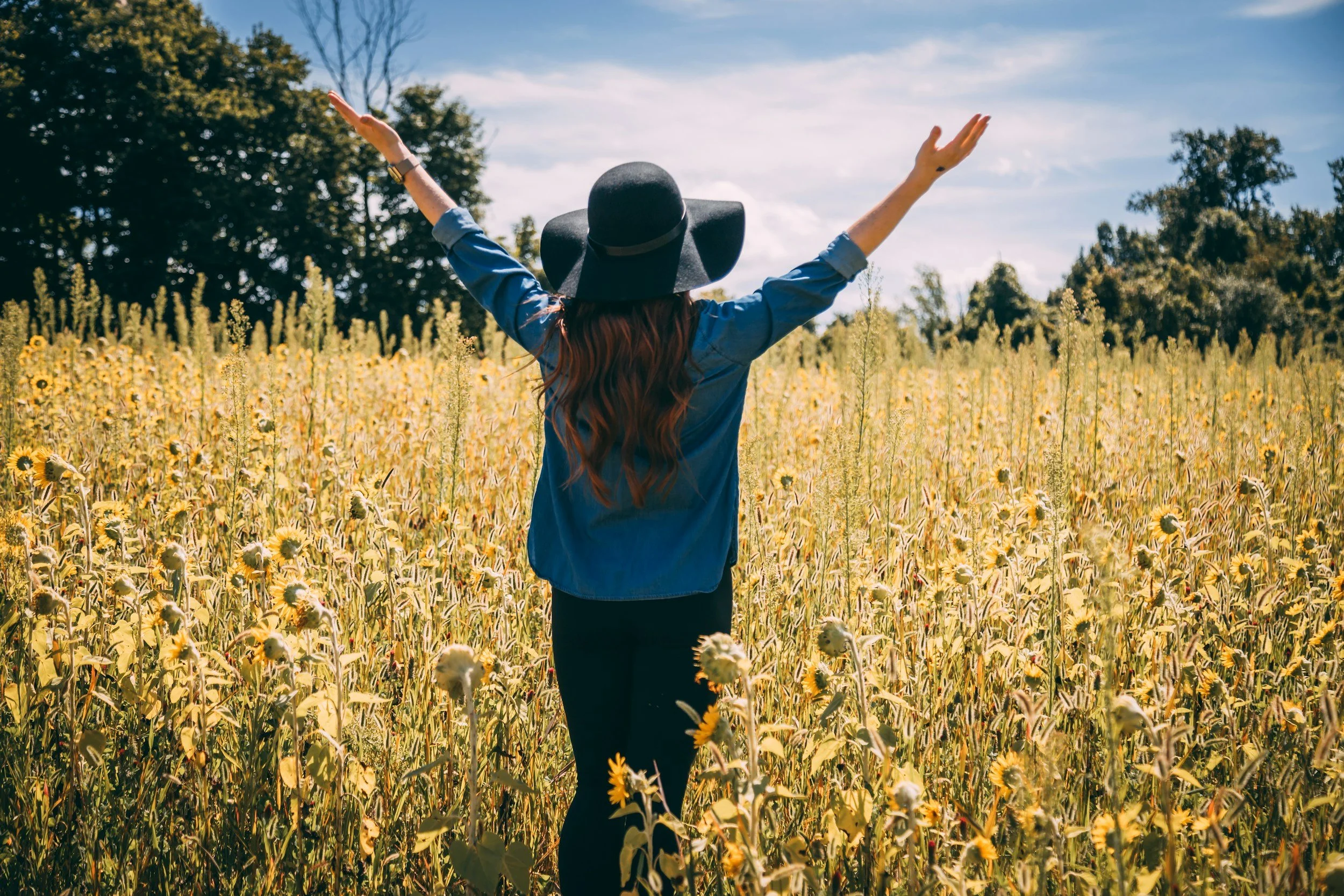
Photo by @aloragriffiths Unsplash
Gratitude is one of those words that gets used so often in the wellness world that it can start to feel a little cliché. Keep a gratitude journal. Count your blessings. Focus on the positive. And while I absolutely believe there is value in all of those things, I also think gratitude can be misunderstood. Being grateful doesn't mean you have to pretend everything is wonderful. It doesn't mean ignoring disappointment, stress, grief, frustration, or the really hard seasons of life. Sometimes life is hard. You can acknowledge that and still notice what's good. For me, that's what gratitude is really about.
Gratitude Isn't Toxic Positivity
There is a big difference between gratitude and forcing yourself to be positive. If you're having a difficult day, telling yourself, “Other people have it worse, so I shouldn't be upset,” isn't gratitude. That's dismissing your own feelings. Two things can be true at the same time. You can be stressed about work and grateful to have a job. You can be exhausted by motherhood and incredibly grateful for your children. You can be going through a difficult season and still laugh with a friend. You can wish something in your life were different while appreciating everything that is already good.
Gratitude doesn't erase the hard things. It simply makes sure the hard things don't get to be the only things you see.
Our Brains Are Really Good at Noticing What's Wrong
Human brains are naturally pretty talented at finding problems. We notice the thing that went wrong, the person who annoyed us, the email we don't want to answer, the traffic, the mess, the schedule change, or the one thing we didn't accomplish. Meanwhile, ten perfectly good things may have happened that barely registered. Practicing gratitude can help us become a little more intentional about noticing those things too. Maybe the weather was beautiful. Maybe your body felt strong during your workout. Maybe your kid made you laugh. Maybe someone sent you a thoughtful text. Maybe you had ten quiet minutes to yourself. None of those things need to be life-changing to be worth noticing.
Gratitude Can Be Really Small
I think sometimes we make gratitude harder than it needs to be because we assume we need these profound answers. You don't. You can be grateful for clean sheets. A good cup of coffee. Your favorite song coming on in the car. A Pilates class that felt really good. A friend who always answers when you call. Your dog being ridiculously excited that you came home even though you were gone for twelve minutes. A really good meal. A sunset. A quiet house. Sometimes the smallest things are the ones that make an ordinary day feel good.
Why Writing It Down Can Help
There's a reason gratitude journals are so popular. Writing something down forces you to slow down long enough to actually notice it. You don't need an elaborate journal or a twenty-minute morning routine. You can simply write down three things you're grateful for at the end of the day. And I actually think it's better when they're specific.
Instead of writing, “I'm grateful for my family,” maybe it's, “I'm grateful that we all sat around the kitchen laughing tonight.” Instead of, “I'm grateful for my health,” maybe it's, “I'm grateful my body was strong enough to do something today that used to be difficult.” Specific moments make gratitude feel real rather than something you're checking off a list.
Gratitude and Movement
Movement is one of the places where gratitude has changed for me over time. It's easy to look at exercise entirely through the lens of what we want to change about our bodies. We want stronger arms, a flatter stomach, more flexibility, better endurance, or whatever else happens to be on the list.
But there's another way to look at it. My body lets me move. It lets me teach. It lets me walk, stretch, lift, dance, travel, hug people I love, and do a million ordinary things I probably don't think twice about. That doesn't mean I have to love everything about my body every second of every day. It just means I can appreciate what it does for me.
I think Pilates naturally encourages that because so much of the practice is about paying attention to your body rather than simply judging it.
Gratitude Can Change Your Perspective
Practicing gratitude doesn't necessarily change your circumstances. It changes what gets your attention. A bad day can still be a bad day. But maybe it wasn't 100 percent bad. There might have been one funny conversation. One good meal. One thing you accomplished. One person who showed up for you. One moment where you felt peaceful.
When we start looking for those moments, we tend to notice more of them. Not because life suddenly became perfect, but because we became better at seeing the parts that were already good.
Be Grateful for Yourself Too
This is one we don't talk about enough. We're usually encouraged to be grateful for other people, opportunities, possessions, and experiences. But what about being grateful for yourself?
For the things you've survived. For the boundaries you've learned to set. For the times you've started over. For your ability to keep showing up. For the person you've become because of everything you've experienced.
It's easy to focus on everything we still want to improve and forget how far we've already come. Sometimes gratitude can simply be looking at yourself and thinking, “I've handled a lot, and I'm still here.”
You Don't Have to Feel Grateful Every Minute
I also don't think gratitude should become another thing we pressure ourselves to do perfectly. You're allowed to have a bad mood. You're allowed to complain sometimes. You're allowed to be disappointed. You're allowed to have days when you don't feel particularly thankful for anything. We're human.
Gratitude is a practice, not a personality requirement. The goal isn't to become someone who never feels negative emotions. It's to develop the ability to eventually look around and recognize that those emotions aren't the entire story.
A Simple Gratitude Practice
If you want to bring a little more gratitude into your day, keep it simple. At the end of the day, ask yourself: What made me smile today? What made my life a little easier? Who am I grateful for? What did my body allow me to do? What is one ordinary thing I don't want to take for granted? You don't even have to write the answers down. Just noticing them is a start.
A Final Thought
I don't think gratitude means looking at your life through rose-colored glasses. I think it means looking at your life honestly and deciding that the difficult parts don't deserve all of your attention. There will always be things we wish were different. There will always be stressful days, disappointments, unfinished goals, difficult people, and seasons we would rather skip entirely.
But mixed in with all of that are people we love, moments that make us laugh, bodies that keep carrying us forward, small accomplishments, beautiful days, and ordinary things that make life feel like ours. Gratitude is simply remembering to notice them. Not because everything is good, but because even when everything isn't good, there is usually still something good to be found.
-Natalie
