Pilates vs. Lagree: Understanding the Difference
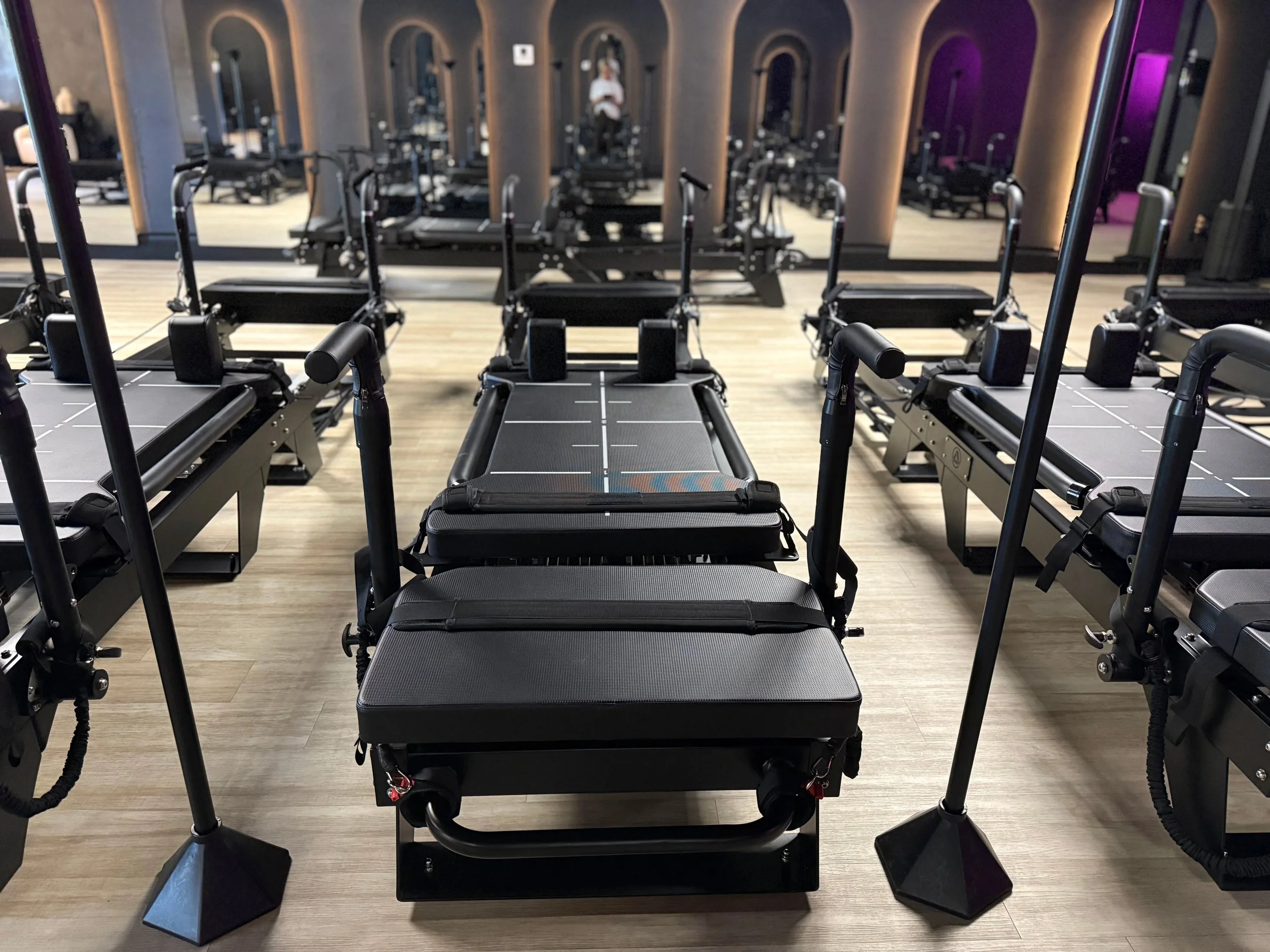
Photo via thecorecollabusa.com
If you’ve spent any time around the fitness world lately, you’ve probably heard both of these words: Pilates and Lagree. Sometimes they’re used interchangeably, sometimes people assume they’re the same thing, and sometimes there’s confusion about which one someone is actually doing.
Both Pilates and Lagree are low-impact, strength-focused workouts that often use machines that look somewhat similar. Because of that, it’s easy to assume they’re variations of the same method. But in reality, they come from very different philosophies and are designed to create different experiences for the body. Neither one is inherently “better.” They’re simply different.
What Pilates Is
Pilates was developed by Joseph Pilates in the early 20th century. His method was built around the idea that strength starts from the center of the body—what he called the powerhouse—and that controlled, intentional movement supports both physical and mental well-being.
Traditional Pilates focuses on:
Breath
Alignment
Core stability
Controlled movement
Mind–body awareness
The exercises are designed to strengthen the body in a balanced way while also improving mobility, posture, and coordination. Pilates can be done on the mat or on specialized equipment like the reformer, Cadillac, chair, and barrels. One of the defining features of Pilates is precision. The goal isn’t to move as fast or as hard as possible. Instead, the emphasis is on the quality of movement and how the body is working together. Pilates often leaves people feeling stronger, more connected to their bodies, and more supported in their everyday movements.
What Lagree Is
Lagree is a much newer workout method developed by Sebastien Lagree. It’s a high-intensity, muscular endurance workout performed on a machine called the Megaformer. Lagree classes usually move continuously with very little rest between exercises. The movements are slow and controlled, but the goal is to create sustained muscular fatigue.
Lagree workouts typically focus on:
Muscle endurance
Intensity
Long time under tension
Continuous movement
Because of the intensity and pacing, Lagree classes often feel more like a strength workout or endurance challenge than a traditional Pilates session.
Why They’re Often Confused
The confusion usually comes from the equipment. The Megaformer used in Lagree workouts looks somewhat similar to a Pilates reformer at first glance. Both have springs, a moving carriage, and handles. But the machines are designed differently and used in different ways. Pilates reformer exercises are built around a specific repertoire and movement principles. Lagree exercises are designed around muscle fatigue and intensity. The experience in the body can feel very different.
In a Pilates class, you’ll likely notice a strong emphasis on breath, alignment, and moving with control. The pace tends to allow for instruction, awareness, and refinement of movement.
In a Lagree class, the focus is often on maintaining tension in the muscles for longer periods of time. It can feel more like a high-intensity strength workout.
Both methods can build strength, but the approach and intention behind the movement are different.
Which One Is Right for You?
That really depends on what you’re looking for. If you’re drawn to mindful movement, improved posture, balanced strength, and a method that supports longevity and body awareness, Pilates may feel like a great fit. If you enjoy high-intensity workouts and the challenge of pushing muscular endurance, Lagree may appeal to you. Some people enjoy both and alternate between them. The most important thing is choosing a movement that feels supportive, sustainable, and aligned with what your body needs.
Movement doesn’t have to be competitive or categorized as “better” or “worse.” Different methods exist because different bodies and preferences exist. For me, Pilates has always stood out because of how it makes me feel afterward—strong, aligned, and connected rather than depleted. And that’s ultimately what matters most: finding a form of movement that supports your life, your body, and your well-being.
-Natalie
